Every once in a while, you might hear your child play something unexpected.
Not from their book. Not assigned by a teacher. Just something they made up on their own.
That’s improvising—and it’s one of the most valuable parts of learning music.
Improvisation gives kids the chance to explore without worrying about getting it “right.” There’s no wrong note, no checklist, no pressure to perform perfectly.
Instead, there’s curiosity.
What happens if I try this note? What if I play it louder? Softer? Faster?
In those moments, your child isn’t just practicing—they’re creating.
And that kind of exploration builds a different kind of confidence. It teaches them that music isn’t just something to follow—it’s something they can shape and make their own.
It also strengthens listening skills. Kids begin to hear how notes relate to each other, how changes in dynamics affect the mood, and how music can express different emotions.
The best part? It doesn’t have to be structured or scheduled.
Improvisation often happens naturally when kids feel comfortable enough to just play.
Try this today: Ask your child to make up a short song—any notes, any rhythm. No corrections, no instructions. Just listen and enjoy what they create.
If you’ve ever said, “Did you practice today?” and gotten a sigh in return—you’re not alone.
Practice has a funny way of turning into “the thing we have to do,” especially as schedules get busy toward the end of the school year. Between homework, activities, and everything else going on, it can start to feel like just another item on a long list.
But here’s something we remind families all the time:
Practice isn’t about long sessions. It’s about regular connection.
Five minutes here and there—right after school, before dinner, or even just picking up the instrument for a quick run-through—can do more than a single long practice once a week. It keeps the instrument familiar in your child’s hands. It keeps their progress moving forward, even in small steps. And maybe most importantly—it keeps the experience feeling positive instead of overwhelming.
When practice feels manageable, kids are far more likely to come back to it on their own.
And you might start to notice something shift.
Instead of avoiding practice, they’re a little more willing. Instead of frustration, there’s a bit more confidence. Instead of pressure, there’s progress.
Because when the pressure goes down, the willingness goes up.
And that’s where real growth starts to happen!
Try this today: Instead of asking for a full practice session, ask for just five minutes. Sit nearby, listen, and keep it light—those small moments add up more than you think.
There’s something we see every year around this time.
A student has made real progress—they’ve figured out how to hold their instrument, play their first notes, maybe even perform in a concert—and then… their instrument lives at school.
It makes sense. It’s easier. One less thing to carry.
But here’s the thing: music doesn’t really grow in just one place.
When an instrument comes home, something shifts. It becomes part of your child’s everyday world—not just something they do in a classroom, but something they own.
We start to see small moments happen: A few notes played before dinner. A sibling listening in the background. A parent saying, “Hey, play that again.”
Those moments build confidence in a way that structured time alone can’t.
And heading into summer, that confidence matters. Students who stay connected to their instrument—even casually—tend to come back next year feeling ready, not rusty.
Not perfect. Just comfortable.
That’s the goal. 🙂
Try this today: Ask your child what they can practice at home over the summer and find a simple, visible place where it can stay out and ready!
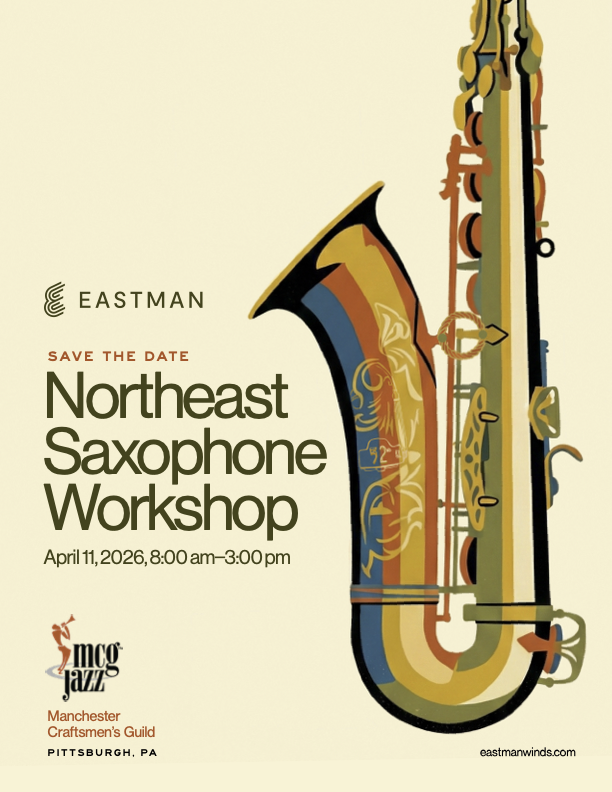
At the Northeast Saxophone Workshop, students will have the opportunity to learn directly from two exceptional artists who are passionate about education and helping young musicians grow.
Mark Jackovic is a Pittsburgh-based saxophonist, educator, and recording artist known for his expressive playing and dedication to mentoring the next generation of musicians. As a familiar face in the regional music community, Mark has worked with countless students and ensembles throughout Western Pennsylvania.
Joining him is Chris Farr, an internationally recognized jazz saxophonist, composer, and Eastman performing artist. Chris has performed and taught around the world and brings a wealth of experience in jazz performance, improvisation, and saxophone pedagogy.
Together, these artists will lead sessions designed to inspire creativity, strengthen technique, and help students think more deeply about music.
What Students Will Experience
Throughout the day, participants in the Northeast Saxophone Workshop will engage in a variety of educational and musical activities designed for saxophone players of different experience levels.
Students can expect:
Educational sessions focused on tone, technique, and musicianship
Opportunities to hear and interact with professional saxophonists
Time to connect with other saxophone students from the region
A relaxed jam session where participants can perform and explore improvisation
Whether a student is just beginning their musical journey or already performing in school jazz ensembles, the Northeast Saxophone Workshop offers a welcoming environment where students can grow as musicians and gain new inspiration.
Special Opportunities for Band Directors and Educators
The Northeast Saxophone Workshop is also a fantastic opportunity for band directors, jazz band directors, and private instructors to bring their students to a meaningful musical experience outside the classroom.
Educators who attend and participate will receive:
Complimentary UPO Cork Grease
Eastman Saxophone Swab
Educators who bring five or more students will also receive:
Tim McCalister Alto or Soprano Saxophone Mouthpiece
Band directors who bring their entire saxophone section will be entered into a drawing for a chance to win an Eastman EAS652 Alto Saxophone for their classroom!
Events like the Northeast Saxophone Workshop provide students with the opportunity to learn from professional artists, hear new ideas, and become part of a larger musical community.
Event Details
Event: Northeast Saxophone Workshop Date: April 11 Time: 8:00am – 3:00pm Location: Manchester Craftsmen’s Guild, Pittsburgh, PA 15233 Cost: Free (registration required)
Students, educators, and saxophone enthusiasts from across the region are encouraged to attend.
Brighton Music Center is proud to support this event and help connect local musicians with inspiring educational opportunities!
When your child first brings home their instrument, it’s exciting, but also a little overwhelming. Every case has multiple parts, and it’s important to know what comes with the rental, what needs to be returned, and what’s okay to replace as you go.
Below is a quick breakdown by instrument. Items marked with a * must be returned with the rental at the end. Other items are consumables – meaning they’re used up and replaced over time (like reeds, oils, or rosin).
All instruments include a hard-shell case and a name tag, and all mouthpieces are sanitized before being rented out. We got you!
Flute
Cleaning rod*
Clarinet
Mouthpiece with cap & metal ligature*
Cork grease
Swab
2 starter reeds
Alto Saxophone
Mouthpiece with cap & metal ligature*
Cork grease
Body swab
2 starter reeds
Neck strap*
Trumpet
Mouthpiece*
Valve oil
French Horn
Mouthpiece*
Rotor oil
Trombone
Mouthpiece*
Slide oil
Violin / Viola
Bow*
Rosin
Cello / Bass
Fabric case
Bow*
Rosin
Bell Kit
Metal instrument stand (2 parts)*
Bells*
Snare pad*
Drum sticks*
Mallets*
Music stand insert for the bells*
Snare Drum Kit
Drum*
Drum stand (2 parts)*
Rubber drum pad*
Drum sticks*
Having the right parts in the case helps your child succeed, and makes sure nothing gets lost along the way. Consumable items like reeds, oils, or rosin will need to be replaced from time to time, and that’s completely normal.
If you’re ever unsure about what belongs in your child’s case or what should be replaced, just ask, we’re always here to help.
Need help putting the instrument together? We’ve got easy step-by-step guides for every instrument right here.
Getting started the right way matters. Proper assembly not only helps your child play better – it prevents damage and frustration down the road. Below are quick reminders for each instrument, with links to video guides you can watch together.
Flute
Simple, but delicate. Handle carefully to avoid bending keys.
Hold pieces by the smooth metal tubing, not the keys.
Headjoint: line up the hole with the center of the keys.
Footjoint: align the rod with the center of the bottom keys.
If it feels tight, use a gentle twisting motion, never force. (you may need to wipe down the tenons if its a bit dirty)
Always check the flute is straight before playing. Watch the video →
Clarinet
Lots of parts, but easy once you get the order right.
Assemble from the bell upward: bell → lower joint → upper joint → barrel → mouthpiece.
Grease corks regularly so joints slide smoothly.
When connecting upper and lower joints, press the bridge key so it doesn’t bend.
Reed should be damp before putting on, flat side against the mouthpiece.
Never leave the reed on after playing, it will warp & get really gross! Watch the video →
Saxophone
Big and fragile, always use the neck strap before lifting.
Body stays in the case until the strap is on.
Attach the neck to the body gently, line up the octave key.
Mouthpiece slides onto the cork with cork grease as needed.
Tighten ligature screws evenly (not too tight!).
Always swab the inside after playing to prevent sticky pads. Watch the video →
Trumpet
Straightforward, but valves are easy to damage.
Insert the mouthpiece with a twist, never a push (to avoid it getting stuck).
Valves must stay in the right order, each is numbered.
When oiling, pull out the valve, add a few drops, then carefully put back into place. (avoid spinning the valves in the casing)
Slides should move smoothly, use slide grease sparingly.
Always release water from the spit valve after playing. Watch the video →
Trombone
Unique build, treat the slide like glass.
Connect slide and bell sections carefully, tightening the lock ring.
Hold the trombone by the brace, never the slide.
Lock the slide when not playing, even for a moment.
Oil the slide often: a little lubricant and a spray of water keeps it smooth.
Never set the trombone down on the bell, it can warp the slide. Watch the video →
French Horn
Different from other brass, left hand works the valves.
Insert mouthpiece with a gentle twist, don’t jam it.
Right hand rests lightly inside the bell; it helps with tone.
Always carry by the tubing, not the valve levers.
Don’t rest the horn on its bell, it can damage the shape.
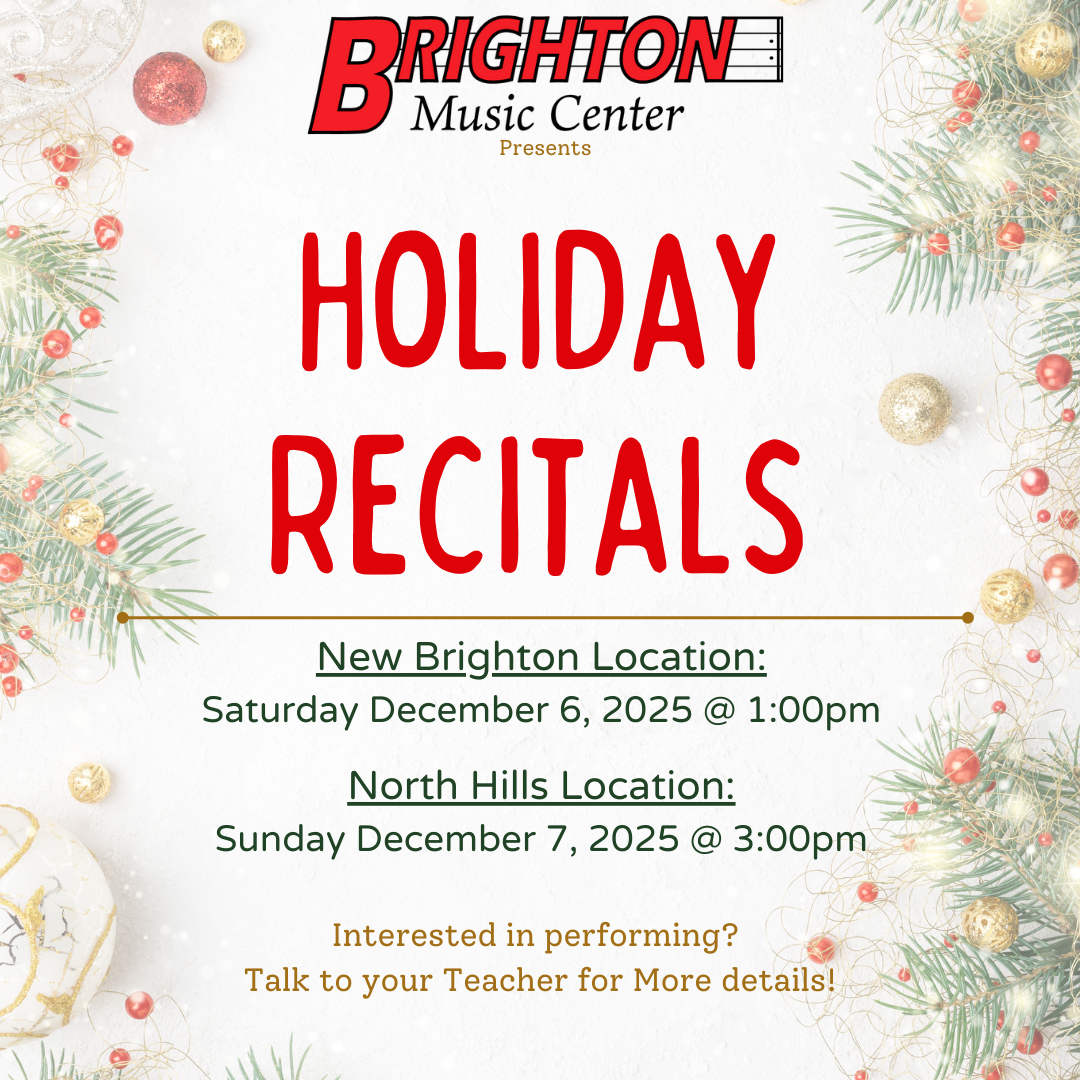
Come celebrate the talent and growth of our music students with two special recital events this December! Whether you’re performing or attending to cheer someone on, you’re in for a great afternoon of music.
🪑 Seating & Parking Audience seating is first come, first served behind the student section. Accessible seating available upon request.
North Hills: Large parking lot in front of the building
New Brighton: Street parking available
🎵 For Performers Students should arrive on time for dress rehearsal with their instrument and music. Everything else will be provided. Teachers will walk students through performance order and warm-ups.
Each student will perform a piece selected with their teacher. Some may perform duets or group pieces, if approved in advance.
👗 What to Wear Dress like you would for a school concert or formal event. ✔️ Dresses, dress pants, dark jeans, collared shirts, nice shoes ❌ No ripped clothing, athletic wear, flip-flops, or casual hats
(we usually love ugly Christmas sweaters any day of the week…but just not for this type of recital 😉 )
🍪 Cookie Table & Recording
New Brighton: Yes to cookies! If bringing homemade treats, please label allergens.
North Hills: No food or drink allowed in the gym.
Both recitals will be recorded, and families will receive a private YouTube link to individual performances after the event.
Students & Parents: Use the button below to register!
After you sign up, we’ll coordinate with your teacher to confirm your performance and help select the piece you’d like to showcase.
Practical tips and what to expect with a Brighton Music Center rental.
The first month of learning an instrument is exciting, but it can also feel a little overwhelming. There are new sounds (some squeaky, some wonderful), new routines, and sometimes questions you didn’t see coming.
That’s why Brighton Music Center’s rental program is built to support families, not just on day one, but all year long. Here’s what the first month usually looks like, and how we’re here to help along the way.
What’s Included in Your Rental
When you rent from BMC, you can expect:
An instrument that’s cleaned, adjusted, and ready to play
All the essentials – like mouthpieces, reeds, bows, or rosin – already in the case
School delivery (if your child’s school is partnered), so it’s waiting for them in class
Protection that covers repairs and adjustments, including accidental damage
Easy exchanges if your child’s teacher recommends a switch to a different instrument
We’ve set it up this way so families can focus on music, not logistics.
“If…” Situations Parents Commonly Face in Month One
If the instrument isn’t working right… Sticky valve? String out of place? Something just feels off? Call, text, or use our Contact Us form. We’ll guide you through a fix or arrange a replacement ASAP – often through your child’s school, so they don’t miss class time.
If your child wants to switch instruments… Sometimes kids realize another instrument might be a better fit. Check with their teacher first – then let us know. Easy, no stress.
If your child isn’t bringing their instrument home… This happens often. Sometimes they forget, or they’re unsure if they can bring it back and forth. Gently encourage them by asking, “Can you show me something you learned today?” That simple interest helps build the habit of playing at home.
If a piece is missing (like reeds or rosin)… Don’t panic – just reach out! We’ll make sure your child gets what they need quickly, often with delivery to school.
If your child says, “I’m not good at this”… Early frustration is normal. Remind them progress takes time, and celebrate the small wins, like remembering how to hold the instrument, or playing their first note without squeaks.
If you have a question… No question is too small. Whether it’s “How do we clean this?” or “Is this sound normal?”, we’ve seen it all. Your rental includes ongoing support, so you’re never left figuring things out alone.
Your Role as a Parent
You don’t need to play an instrument to make a huge difference. Your presence – listening, asking questions, and encouraging – matters more than you know.
At Brighton Music Center, we’re here to walk alongside you during this first month and every month after. You’ve got this and we’ve got you.
In the middle of learning an instrument, it’s easy for kids to focus on what still feels hard: high notes, tricky fingerings, or rhythms that don’t quite line up. What they often don’t see is how much progress they’ve already made.
That’s where you come in.
The Question That Changes Perspective
Ask your child:
“What has been difficult but is better now?”
It’s a simple question, but it encourages reflection. It helps them realize that what once felt impossible is now part of their everyday playing. That shift can build confidence and spark new motivation.
Why This Works
Kids usually measure success in big milestones (finishing a song, performing in concert).
But most progress happens in small, everyday breakthroughs like fewer squeaks, smoother bowing, or reading a rhythm more easily.
Recognizing those small wins helps them keep going when the next challenge feels tough.
Try This Tonight:
Bring it up at dinner or on the ride home:
“What’s one thing in music that used to be tough, but feels easier now?”
Then celebrate their answer, big or small. Reflection builds pride, and pride builds persistence. 🙂
Confidence grows when progress is seen. Ask your child what’s gotten easier in music lately. Celebrate their answer—you’ll remind them that every step forward matters.
Because resilience is built one challenge at a time.
Every musician (beginner or professional) runs into a “tricky spot.” It could be one measure that never seems to sound right, a fingering that feels awkward, or a rhythm that keeps slipping.
This month’s Mini Goal from Brighton Music is to help your child pick just one tricky spot in their music and focus on working through it.
Why This Matters
When kids face something hard, it’s tempting to avoid it. But working slowly through challenges teaches patience, problem-solving, and resilience, the same skills they’ll use in school, sports, and life.
And the best part? They don’t have to do it alone.
How You Can Support Them
You don’t need to know music to help. Just:
Ask your child what part of their music feels hardest.
Encourage them to play just that part – not the whole song – two or three times.
Celebrate progress, even if it’s tiny.
Your cheerleading keeps them motivated when they’re tempted to give up.
Try This:
Say:
“Show me the part that feels tricky and then show me how it sounded after practicing it a few times.”
Clap, smile, and remind them: tough spots don’t last, but persistence does.
Celebrate persistence, not perfection. Ask your child to play just the part that feels hardest this week. Cheer them on—tiny wins add up to big confidence.